
Key Takeaways
-
The best sheets for eczema come down to fiber structure, non-migratory dye chemistry, and OEKO-TEX® STANDARD 100 Class I certification, more than thread count or vague "hypoallergenic" labels.
-
Migratory dyes are colorants that can transfer from fabric to skin under body heat and sweat, and they're a documented contact allergen for eczema-prone skin.
-
OEKO-TEX® STANDARD 100 Class I is the infant-grade tier of textile chemistry certification, testing the finished textile against more than 1,000 harmful substances.
-
TENCEL™ eucalyptus lyocell, Belgian linen, and long-staple Supima cotton percale are the three sheet fabrics that consistently work for eczema-prone sleepers.
-
Polyester and synthetic blends, PCM cooling treatments, and fabric softener residue are the three main sheet-related triggers eczema-prone skin should avoid.
If you have eczema, you've probably already audited every input touching your skin: detergents, fragrance, skincare.
The variable most eczema shoppers don't touch is the sheet they sleep on for eight hours a night. That's because every "best sheets for eczema" listing uses the same three words: "hypoallergenic," "gentle," or "safe for sensitive skin."
None of those words are regulated in textiles. Anyone can print them without testing anything, so the audit tends to stop at the bedroom door.
The specs that actually matter sit further down the product page: what the fiber is, what the dye is doing under body heat and sweat, and what the finished textile has been tested against.
Starting with certified sheet sets skips the guesswork.
3 Best Sheet Fabrics for Eczema-Prone Skin
Three fabrics consistently work for eczema-prone sleepers, each suited to a different sleep style.
All three carry OEKO-TEX® STANDARD 100 Class I certification, so the infant-grade chemistry bar is met regardless of which one fits your bed.
TENCEL™ Eucalyptus Lyocell: Best for Hot Sleepers with Eczema
TENCEL™ eucalyptus lyocell is an engineered cellulose fiber spun from sustainably farmed eucalyptus pulp through a closed-loop process.
The rounded fiber cross-section moves 32% more air than cotton and pulls moisture into its core, keeping the sheet surface dry against your skin.
That matters for eczema because trapped heat and overnight sweat sit at the top of most sleepers' trigger lists.
The Breeze line is also pH-balanced to the skin's natural range, with no synthetic finishes on the surface. Plus, the dyeing process locks pigment inside the fiber, meaning the color stays in the fiber and never enters your skin.
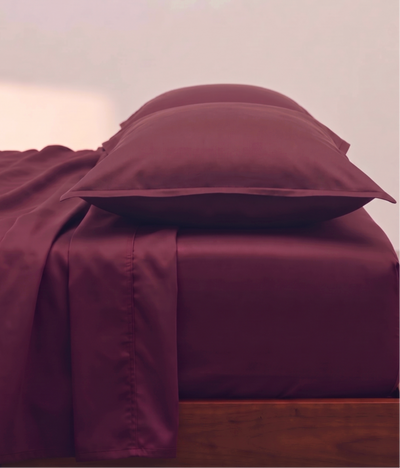
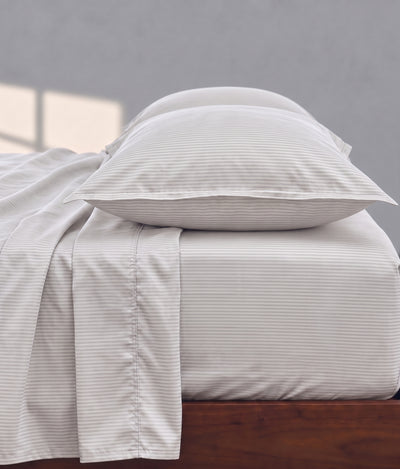
Buffy's Breeze Sheet Set is 100% TENCEL™ eucalyptus lyocell woven at 300 thread count.
Belgian Linen: Best for Warm-Climate Eczema Sufferers
Long-staple flax grown in the linen regions of Belgium produces a fiber with hollow cores and an open plain weave that keeps air circulating through the sheet all night.
Linen's breathability is structural, so it doesn't wash out the way topical cooling treatments do.
That airflow keeps trapped heat off the skin and reduces the sweat load that pushes eczema toward a flare.
Linen also softens with each wash cycle, developing a lived-in drape over the first 10 or so cycles.
Buffy's Belgian Linen Sheet Set uses 100% Belgian flax that softens with every wash.
Long-Staple Supima Cotton Percale: Best for Classic Cotton Fans
Long-staple Supima cotton grown exclusively in the US produces smoother, more durable sheets than standard cotton.
The percale weave (a one-over, one-under construction) keeps the surface airy and low-friction, which matters for eczema-prone skin during scratchier weather.
Cotton percale also holds up through frequent washing, which is what most dermatologists recommend for eczema bedding.
Buffy's Supima Cotton Collection uses 100% long-staple Supima cotton in a percale weave.
What Makes These Sheets Actually Different for Eczema
Fabric is only half the picture. What's in the finished textile is the rest, and it's where most cheaper "hypoallergenic" sheets fall apart.
Four claims separate Buffy's sheets from the market.
Non-Migratory Dyes
Migratory dyes are colorants that aren't fully bonded to the fiber. Under body heat and sweat, they can transfer from the fabric surface into the skin, which is a documented contact allergen route.
Azo dyes, specifically, are among the textile chemicals most commonly flagged in the contact dermatitis literature.
Buffy's dyes are saliva-tested and locked into the fiber, so the color doesn't transfer from fabric to skin under heat and sweat.
OEKO-TEX® STANDARD 100 Class I Certification (Infant-Grade)
OEKO-TEX® STANDARD 100 Class I is the infant-grade tier of textile chemistry certification, the strictest available. It tests the finished textile against more than 1,000 harmful substances, including formaldehyde, heavy metals, and processing residues.
For anyone with eczema, this level of testing matters more than marketing copy suggests, because perspiration pulls chemical residues into compromised skin more readily than dry contact does.
Every Buffy sheet set carries this certification.
Formaldehyde Non-Detectable (<16 mg/kg)
Formaldehyde is one of the most common textile chemistries flagged in contact dermatitis studies. It shows up in wrinkle-free and no-iron finishes as a formaldehyde-releasing preservative that stays in the fabric and transfers to skin overnight.
Buffy's sheets test at non-detectable levels below 16 mg/kg, which means the wrinkle-finish chemistry that triggers many eczema-prone sleepers isn't in the fabric at all.
Heavy Metals Locked
Heavy metals like nickel, chromium, and cobalt are established contact dermatitis triggers, and they can enter textiles through dyeing and finishing.
Buffy's chemistry standard locks heavy metals out of the finished textile.
For eczema-prone skin that's already reactive to these substances in jewelry or fasteners, the same substance categories in bedding chemistry come with lower reactivity odds when the fabric is chemistry-locked.
Sheet Fabrics and Finishes That Make Eczema Worse
Some fabrics and finishes create problems for eczema-prone skin, no matter how "gentle" the marketing sounds.
These three are ones you must avoid.
Polyester and Synthetic Blends
Polyester and microfiber trap heat against the body and hold moisture at the fabric surface. That's the exact warm-damp environment that pushes eczema toward a flare overnight.
Static charge in synthetic fabrics also holds skin particulates and detergent residues longer than plant-based cellulose fibers do.
A "cotton-blend" sheet with unnamed synthetic content is worth skipping.
PCM and Chemical Cooling Treatments
Sheets marketed on "cooling technology" often use Phase Change Material (PCM) coatings sprayed onto fabric after weaving.
These finishes deposit chemistry directly onto the skin-contact surface, register cold for the first week of use, and fade across 10 to 20 wash cycles.
For eczema-prone skin, that residue is a documented trigger regardless of how the cooling claim is marketed on the product page.
Fabric Softener as an Applied Finish
Some sheets ship with fabric softener already applied at the mill.
It gives the sheet a smooth first touch and washes out over the first few cycles, but during that window, the softener chemistry sits directly on the skin-contact surface every night.
Sheets that soften on their own with each wash cycle (lyocell, linen, and long-staple cotton all do) don't need this shortcut.
How to Wash Eczema-Safe Sheets Without Undoing Them
How you wash your bedding matters as much as what you buy.
Detergent residue, softener chemistry, and dryer product coatings all accumulate in fabric and make direct contact with skin every night.
-
Wash new sheets before first use: Manufacturing and shipping residue clear in the first cycle. Skipping this can trigger a flare on night one.
-
Use fragrance-free detergent, the minimum effective amount: Fragrance is the most common laundry contact allergen. Excess detergent leaves more residue in the fabric.
-
Skip fabric softener and dryer sheets entirely: Both coat fibers with chemistry that transfers to skin overnight. Lyocell, linen, and long-staple cotton soften with each wash without help.
-
Machine wash cold, tumble dry low: Standard for lyocell, linen, and Supima cotton.
The Eczema Variable You Never Eliminate
Managing eczema is a series of elimination trials: cut dairy for a month, switch to fragrance-free detergent, remove the new soap, watch the skin, add back one variable at a time. The variable most eczema sufferers never eliminate is their sheets.
Sheets don't fit the elimination-trial pattern because you sleep on them every night, you buy them in sets, and you don't rotate them the way you rotate a moisturizer.
The workaround is buying sheets whose chemistry is already verified, so the elimination trial isn't necessary.
Buffy's sheet collection publishes fiber, dye chemistry, certification, and finished-textile testing on every product page.
Test any of them for seven nights before the trial converts.
Frequently Asked Questions (FAQs)
What are the best sheets for eczema-prone skin?
TENCEL™ eucalyptus lyocell, Belgian linen, and long-staple Supima cotton percale are the three sheet fabrics that consistently work for eczema-prone skin. Look for OEKO-TEX® STANDARD 100 Class I certification on the product page, non-migratory dye chemistry, and formaldehyde non-detectable ratings. Those three verify what's actually in the finished textile.
Which bedding fabric is gentlest for eczema?
For most eczema-prone sleepers, TENCEL™ eucalyptus lyocell offers the gentlest overnight surface. The fiber moves moisture off the skin, keeps the microclimate dry, and pairs with non-migratory dye chemistry so the color stays in the fiber. Belgian linen is a close second for warm-climate sleepers who prefer airflow over surface smoothness.
Why do migratory dyes matter for reactive skin?
Migratory dyes are colorants that aren't fully bonded to the fiber. Under body heat and sweat, they can transfer from the fabric surface into the skin. For eczema-prone skin, which reacts more readily to contact allergens than healthy skin does, migratory dyes are a documented trigger. Non-migratory dyeing locks pigment inside the fiber structure, which is why Buffy tests its dyes to confirm the color stays in the fabric under saliva contact.
What sheets should people with eczema avoid?
Skip polyester and synthetic blends (they trap heat and moisture), PCM cooling treatments (they deposit chemistry directly onto the skin-contact surface), and sheets that ship with fabric softener pre-applied (the coating transfers to skin overnight). Any of these can trigger eczema through chemistry that fabric alone doesn't fix.
Is higher thread count better for eczema?
No. Thread count is a marketing metric that has little to do with skin safety. A 300-thread-count sheet in long-staple lyocell will sleep more smoothly and be cooler against eczema-prone skin than a 600-thread-count sheet in short-staple cotton. Focus on fiber, dye chemistry, and certification before thread count.