
3 Best Sheets for Menopause (Ranked by Cooling Performance)
Key takeaways:
Most women in their forties and fifties become household experts on the small math that decides a night's sleep.
There's the angle of the bedroom fan, the cooler side of the pillow, and the thermostat number that lands a degree too cold for partners and a degree too warm for the person managing the heat.
Sheets become part of the same calculation, and the wrong fabric ends it badly.
The best sheets for menopause come down to fiber.
The right plant-based fabrics handle moisture and surface temperature in ways that genuinely matter for managing hot flashes and night sweats.
Clinical evidence on moisture-managing bedding backs that up, with measurable improvement by week two of consistent use.
What changes is the choice. Pick the fiber that matches your climate and the symptoms you're managing, and the bed stops being a nightly negotiation.
The Best Sheets for Menopause, Ranked
Three fabrics dominate the cooling-bedding category.
Here's how they perform for sleepers managing night sweats and hot flashes, ranked by how well the fiber handles sustained moisture output.
TENCEL™ Lyocell: Best for Heavy Night Sweats and Hot Flashes
TENCEL™ lyocell is an engineered cellulose fiber spun from sustainably farmed eucalyptus wood pulp.
The fiber draws moisture into its core, keeping the sheet's surface drier and allowing heat and humidity to escape the bed continuously throughout the night.
For menopause symptoms, the timing matters.
During a hot flash, sweat hits the sheet fast. TENCEL™ pulls it into the fiber core, where it can't pool against the skin, and the trapped heat releases as vapor through the rest of the night. That's why it sits at the top of the ranking for sleepers with heavier symptoms.
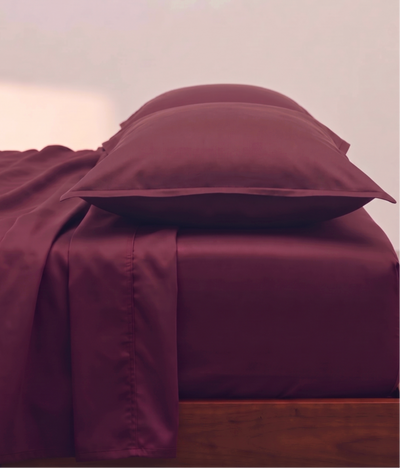
Buffy’s Breeze Sheet Set is woven from 100% TENCEL™ lyocell at a 300 thread count, with a fitted sheet, flat sheet, and two pillowcases in the set. The Breeze line is research-backed to limit perspiration, which is the exact job menopause symptoms ask sheets to do.
Best for: Anyone managing regular night sweats, hot flashes, or who runs hot in any climate. If you've tried other cooling sheets that wear off in the wash, this is the upgrade most likely to actually deliver.
Belgian Linen: Best for Airy, Warm-Climate Sleep
Belgian linen takes the second slot.
Long-staple flax grown in the linen regions of Belgium produces fibers with hollow cores and an open plain weave that pulls air through the sheet continuously.
The structure favors airflow over deep absorption, which makes linen well-suited to lighter night sweats and warm-climate sleeping.
The other quality is what the fabric does over time.
New linen has a crisp hand that relaxes over the first 10 or so wash cycles into the lived-in drape it's known for, and it handles humid summer bedrooms without the trapped-heat effect that denser fabrics produce.
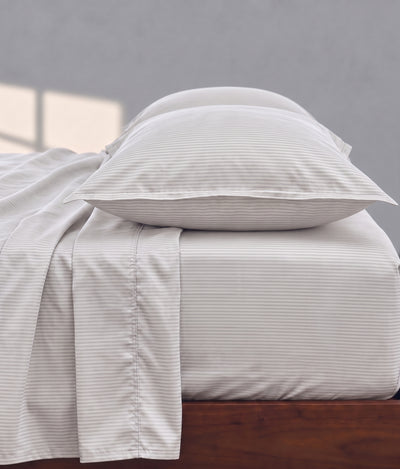
Buffy's Belgian Linen Sheet Set uses 100% Belgian flax woven at 155 grams per square meter, with a fitted sheet, top sheet, and two pillowcases in the set.
Best for: Sleepers in warm or humid climates, those with lighter night sweats, and anyone who prefers the relaxed, textured drape of linen over the smoother surface of lyocell.
Supima Cotton Percale: Best for Crisp Cotton Without the Heat
Supima cotton percale rounds out the ranking.
Long-staple Supima cotton, grown exclusively in the US, produces softer, smoother sheets than standard cotton, and the percale weave (a one-over, one-under construction) keeps the surface light.
Percale runs noticeably cooler than cotton sateen because the weave is less dense.
The tradeoff is honest.
Cotton holds moisture at the surface longer than lyocell does, so percale fits sleepers with milder night sweats more comfortably than those with heavy hot flashes.
People who run mildly warm but don't experience full flashes tend to find cotton percale the right middle ground.
Buffy's Supima Cotton Collection uses 100% long-staple Supima cotton in a percale weave.
Best for: Classic cotton fans, sleepers with milder night sweats, and anyone who prefers the crisp percale finish to the smoother surface of lyocell or the textured drape of linen.
How Cooling Sheets Help with Menopause Symptoms
The cooling sheet category isn't just marketing language. Three lines of evidence connect moisture-managing fibers to measurably better sleep for women managing night sweats and hot flashes.

Clinical evidence on moisture-managing bedding
A peer-reviewed, IRB-approved study (Montgomery et al., 28 women with night sweats over 8 weeks) showed 52% improvement in sleep quality (PSQI), 53% faster sleep onset, 31% fewer sleep disturbances, and 45% less daytime dysfunction.

Measurable fiber-level cooling, strongest in TENCEL™ lyocell
50% higher moisture uptake than cotton, 2.5× higher vapor flux, and Qmax of 0.224 w/cm² per FTTS-FA-019 testing.

Two-week noticeable difference
Statistically significant improvement appeared by week two of the Montgomery study, which is when the fiber-level effects compound into a real shift in night-to-night sleep quality.

What to Look For When Shopping for Cooling Sheets
Once you've picked the fiber, four shopping decisions decide whether the sheets actually deliver the cooling they're built for.
Try Before You Commit
Look for brands offering at-home trials of seven nights or more, plus free returns. Cooling sheets need real-night testing through actual hot flashes, not store touches.
Buffy includes a 7-night at-home trial and 50-night free returns on every sheet set, which means you can sleep through a week of actual use before the charge is processed.
Thread Count vs. Fiber and Weave
The most common shopping mistake is chasing high thread count as the cooling metric. Fiber type and weave matter more.
A 300-thread-count TENCEL™ lyocell sheet sleeps cooler than a 600-thread-count cotton sateen because the fiber does the cooling work.
Percale (one-over, one-under) breathes more openly than sateen (four-over, one-under), regardless of which fiber it's woven from.
Chemistry Certifications to Check: OEKO-TEX® STANDARD 100 Class I
The chemistry certification to look for on cooling sheets is OEKO-TEX® STANDARD 100 Class I. It's the strictest tier in textiles, screening against more than 1,000 harmful substances, including formaldehyde, heavy metals, phthalates, and bisphenols.
The reason it matters on cooling sheets specifically is that skin absorbs chemical residues more readily during perspiration. So, for sleepers managing regular hot flashes, the difference between a certified sheet and an uncertified one is whether the fabric has been measured for skin safety at all.
Look for the certification stated clearly on the product page. Vague chemistry claims without a named certification don't carry the same weight.
Cooling Claims to Skip
PCM (Phase Change Material) coatings are chemical finishes sprayed onto fabric after weaving. They run cold for the first week of use and fade across 10 to 20 wash cycles as the coating breaks down.
Watch for marketing language that uses the word "cooling" or "infused" without naming the underlying fiber. Phrases like "coolest sheet on the market" carry no measurement behind them.
The technical alternative is fiber-based breathability, where the cooling property is built into the material itself and survives years of standard laundering.
How to Care for Cooling Sheets
Cooling sheets perform best with care that preserves the fiber. The same routine works for lyocell, linen, and Supima cotton sets.
- Machine wash cold: Hot water weakens cellulose fibers and shortens the lifespan of the cooling performance.
- Tumble dry low: High heat damages the fiber surface and reduces moisture management over time.
- Skip bleach and fabric softener: Bleach degrades the fiber's surface; fabric softener leaves a residue that blocks moisture uptake.
- Wash separately from heavy items: Towels and denim create friction that wears the fabric down faster.
With proper handling, quality cooling sheets hold their performance through hundreds of wash cycles.
The fiber does the work, and the right care keeps the fiber doing it.
Better Sleep, One Decision Away
Menopause requires ongoing strategies. Sheets are the rare piece you can hand off to a single decision, and the relief of that is bigger than it sounds.
Most symptoms keep adjusting, keep needing new tactics, keep showing up in new forms. The fabric on the bed doesn't have to be one of them.
Pick the fiber that matches how heavy your symptoms run, give the trial period the seven nights it's built for, and the sheets settle into the background of how you sleep.
That's the whole pitch for buying once. Most cooling sheets are science-washed with chemical coatings. Ours is the fiber.
Buffy Sheets & Sheet Sets covers three options for three sleeping profiles, with the trial period built in so the decision is testable before it's permanent.

Frequently Asked Questions (FAQs)
The best sheets for night sweats and hot flashes are made from TENCEL™ lyocell, Belgian linen, or long-staple cotton percale. Lyocell delivers the strongest moisture management with 50% higher uptake than cotton and 2.5× higher vapor flux, which makes it the top pick for sleepers with heavy night sweats. Linen handles lighter symptoms and humid climates well. Cotton percale suits sleepers with milder symptoms.
Bedding made from moisture-managing fibers is most effective for menopause night sweats. TENCEL™ lyocell sheets, Belgian linen sheets, or long-staple cotton percale set the foundation. Add a cooling comforter and lyocell pillowcases for full coverage. Avoid synthetic blends and high-thread-count sateen weaves, which trap heat and moisture against the body during a hot flash.
TENCEL™ lyocell stays driest for someone who overheats at night. The fiber absorbs 50% more moisture than cotton and moves vapor 2.5× faster, which pulls sweat off the skin and out of the bed continuously through the night. Linen runs second for moisture management, and cotton percale handles lighter perspiration.
Bamboo sheets, typically bamboo viscose or bamboo lyocell, are a reasonable cellulose-based option for sleepers managing menopause symptoms. They share some properties with TENCEL™ lyocell since both come from plant pulp. The performance gap depends on the specific bamboo product. Lyocell from eucalyptus typically outperforms bamboo viscose on moisture management because of the closed-loop processing that produces a more consistent fiber structure.
Sheets used through regular night sweats should be washed at least once a week, and twice a week during a flare period. Sweat introduces bacteria and oils that build up faster than in non-sweating beds. Quality cooling sheet sets are built to handle the higher wash frequency without losing performance. Pair the routine with cold water and low-heat drying.
