
Key Takeaways
-
Is microfiber cooling? The honest answer is no for most sleepers: microfiber is a synthetic fabric that traps heat and holds moisture at the surface.
-
Its tightly woven, hydrophobic structure limits airflow and can't absorb sweat, which is why it sleeps warm and is less breathable than plant fibers.
-
Microfiber's real strengths are softness, durability, a low price, and a hypoallergenic weave that resists dust mites; cooling isn't one of them.
-
Fibers that actually cool do it at the fiber level: eucalyptus TENCEL™ lyocell, linen, and long-staple cotton in a percale weave.
Hot night, damp pillow, sheets sticking to your legs at 2 a.m.
If that's your summer, you've probably wondered: is microfiber cooling, or is it part of the problem?
The honest answer is that microfiber usually traps heat. It's marketed as soft and easy, and it is, but softness and cooling are not the same thing.
To understand what is cooling microfiber and what isn't, you have to start with the fiber, because that's where a sheet either moves heat off your body or holds it against you.
Is Microfiber Cooling? No, It Isn't, and Here's Why
Understanding microfiber starts with what it actually is: an ultra-fine synthetic textile, usually polyester and sometimes blended with nylon, engineered for softness and durability more than breathability.
The same structure that makes microfiber sheets feel soft is the structure that makes them sleep hot.
A Tightly Woven Synthetic
Microfiber is tightly woven, often more densely than cotton sheets at the same thread count. That dense weave leaves little space between fibers for air to move.
Less airflow means the heat your body gives off through the night has nowhere to go.
It builds up in the microclimate between you and the mattress, which is why a microfiber bed sheet can feel fine at bedtime and stifling a few hours later.
Over time, high-heat washing makes synthetic fibers pill, roughening the surface and trapping even more air, so the fabric technology behind that soft hand quietly works against you.
It Can't Absorb Your Sweat
Because polyester is hydrophobic, microfiber has a very low moisture regain.
It doesn't take sweat into the fiber the way plant fibers do; the moisture sits on the surface or gets held in the weave. That surface dampness creates a swamp effect and no real cooling.
Some microfiber is marketed on its wicking, but wicking without absorption leaves you with a warm, damp layer, which is exactly what a hot sleeper doesn't want.
Next to a breathable cotton sheet, the difference shows up fast.
The Softness That Traps Heat
Microfiber can feel exceptionally soft, and that softness is exactly why people buy it.
The catch is that a soft synthetic surface still doesn't breathe or pull moisture away, so a sheet can feel plush and sleep warm at the same time.
For anyone with sensitive skin, a night against a damp, non-absorbent surface can make irritation worse.
Softness is real; the breathability that keeps you cool is what's missing.
Is Brushed Microfiber Cooling? Not for Hot Sleepers
Brushed microfiber gets a lot of love for how plush it feels, so it's worth asking directly: is brushed microfiber cooling?
For a hot sleeper, no, and the brushing is a big reason why.
-
Brushing, including double-brushed microfiber, mechanically lifts the fibers to create a fluffy, raised surface. It feels softer than standard microfiber but has even less airflow than the base weave.
-
That raised surface traps warm air against your skin the same way fleece or flannel does: brushing works by creating a layer of still air next to your body, which is precisely what makes a fabric feel warmer. It's genuinely nice on a cold night and a liability when you run warm; the pillow and pillowcase heat up fastest and hold that warmth longest.
-
Better construction can reduce pilling and make the surface feel softer, but it doesn't change what the fiber is made of. Polyester stays hydrophobic no matter how tightly it's brushed or woven, so no amount of "premium" microfiber changes the underlying chemistry that keeps sweat sitting on the surface instead of moving through it.
-
The softness and durability of double-brushed microfiber are real, but no amount of plush surface will keep you cool if the fabric can't move heat and moisture all night long.
-
A peer-reviewed, IRB-approved study (Montgomery et al.) found moisture-managing bedding improved sleep quality 52% at eight weeks and cut sleep disturbances 31%, exactly the continuous moisture movement brushed microfiber can't deliver.
3 Cooler Alternatives to Microfiber Sheets
If microfiber isn't the answer, the practical question is what to replace it with.
The best sheets for temperature regulation share two traits: they absorb moisture into the fiber, and their weave lets heat escape. That combination is what keeps a hot sleeper comfortable throughout the night, from the first hour to the last.
Three fibers do it well.
1. Eucalyptus TENCEL™ Lyocell
TENCEL™ lyocell, made from eucalyptus wood pulp, is the strongest performer on both counts.
The fiber pulls sweat into its core and releases it as vapor, moving heat and moisture away from the body so neither one sits at the surface.
Because the cooling comes from the fiber, it doesn't wash out.
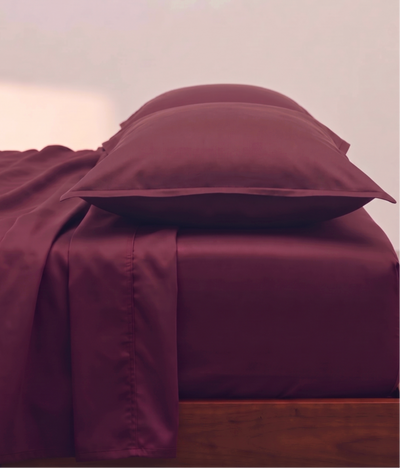
Buffy's Breeze Sheet Set is the measured example, testing at Qmax 0.224 per FTTS-FA-019 for cool-to-touch, so it reads cool from the fiber itself with no coating to fade after a few washes.
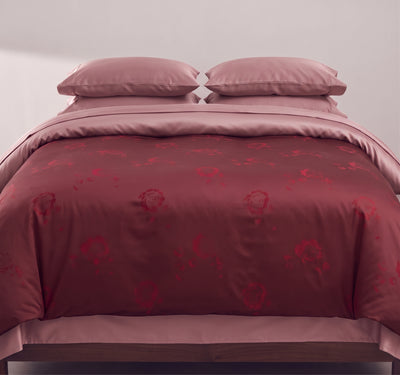
The same eucalyptus fiber runs across the Breeze range, from the sheet set to the duvet cover, so the whole bed sleeps cool.
2. Linen
Linen is the other standout, especially in warm months.
Its open weave allows serious airflow, and the flax fiber absorbs moisture readily, so it breathes and stays dry against the skin.
Linen also has a long lifespan, which makes it a long-lasting, eco-friendly pick that earns its keep over years of use.
Its eco-friendliness appeals to sleepers who want cooling with low waste, and it starts crisp and softens with every wash.
Buffy's Belgian Linen Sheet Set is 100% Belgian flax built for exactly that airy, cool-to-sleep-on feel.
3. Percale Cotton
Cotton is the fabric most people weigh microfiber against, and for a hot sleeper, cotton or microfiber isn't a close call.
The difference between microfiber and cotton comes down to absorption: cotton fabric pulls sweat into the fiber, while a synthetic sheet leaves it on the surface.
Weave matters too. Percale, a crisp one-over-one cotton, breathes far better than smoother sateen sheets and doesn't trap heat the way dense synthetics do.
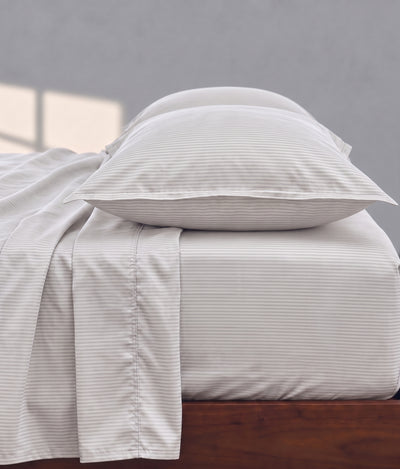
That airflow is what makes Buffy's Supima Cotton Sheet Set, woven from long-staple cotton percale, an easy upgrade from a microfiber sheet set.
Where Microfiber Sheets Still Make Sense
Microfiber isn't useless, and it's fair to say where it earns its place.
If you sleep cold, a brushed set is a cozy, budget-friendly way to snuggle in on a chilly night. It's also a cost-effective pick for a guest room, a kid's bed, or a first apartment, where its softness and durability hold up for years with proper care.
It even has one real health edge: the tightly woven structure resists dust mites and allergens, which makes it a reasonably hypoallergenic option for allergy-prone sleepers.
What microfiber can't do is keep a warm sleeper cool, because that job belongs to the fiber.
If cooling is your priority, that's where to shop. Explore Buffy's cooling bedding to find the fiber that fits how you sleep and gives you a genuinely restful night's sleep.
Frequently Asked Questions (FAQs)
Is microfiber cooling or does it trap heat?
Microfiber usually traps heat. It's a tightly woven synthetic that limits airflow, and because polyester is hydrophobic, it holds moisture at the surface without absorbing it. That combination makes most microfiber sheets sleep warm, especially the brushed versions.
Are microfiber sheets good for hot sleepers?
Not really. For hot sleepers, microfiber's low breathability and poor moisture absorption tend to leave you warm and damp by the middle of the night. Fibers like eucalyptus TENCEL™ lyocell, linen, and long-staple cotton breathe and manage moisture far better, so they're the safer choice if you run hot.
What makes a sheet cooler than microfiber?
Two things: a fiber that absorbs moisture into its core and releases it as vapor, and a weave open enough to let heat escape. Eucalyptus TENCEL™ lyocell does both from the fiber, linen wins on open-weave airflow, and percale cotton breathes far better than a comparable microfiber set. Any of the three beats microfiber on temperature regulation.
Are microfiber sheets hypoallergenic?
Yes, and this is one of microfiber's genuine strengths. Its tightly woven structure creates a physical barrier that resists dust mites, which helps allergy-prone sleepers. It's not the only hypoallergenic option, though. Eucalyptus TENCEL™ lyocell is also gentle on sensitive, allergy-prone skin, so you don't have to trade cooling for allergen protection.
Can high-quality or double-brushed microfiber actually be cooling?
Better construction helps with softness and durability, but it doesn't solve the underlying problem: polyester is hydrophobic, so it can't absorb sweat no matter how it's brushed or woven. Double-brushing actually works against cooling, since it raises the fiber to trap air the way fleece does. If a brand claims their microfiber is cooling, that claim is about finish and marketing, not the fiber itself.