
Key Takeaways
-
OEKO-TEX® is an independent certification that lab-tests finished textiles, every fiber, dye, and thread, against restricted harmful substances.
-
Its flagship label, STANDARD 100, screens the finished product against more than 1,000 harmful substances, with limit values set by product class.
-
Class I is the infant-grade tier with the strictest limits; some premium bedding certifies to it voluntarily.
-
OEKO-TEX® answers a different question than organic: it certifies that the finished product tested below strict limits for restricted substances, whatever the fiber source.
-
Every certificate has a number you can verify at oeko-tex.com, and certificates renew every 12 months.
"OEKO-TEX® STANDARD 100."
It's one of the most recognized textile safety labels in the world, stitched onto tags across bedding, apparel, and towels, and most people have still never looked it up.
Marketing terms like "clean" and "non-toxic" don't require proof, so it's fair to assume this is more of the same. It isn't.
So, what does OEKO-TEX® mean? It's an independent certification proving the finished textile in your hands was lab-tested against a long list of harmful substances and passed. That's a test result, and you can look it up.
Its strictest tier, Class I, is the infant-grade level, with limits tight enough for newborn products. It's the difference between a label that says clean and OEKO-TEX® certified bedding.
Here's what the certification actually covers.
What Is OEKO-TEX®?
OEKO-TEX® is an independent certification system run by the OEKO-TEX® Association, a network of textile testing and research institutes, including the Hohenstein Institute and TESTEX, with member labs across Europe and Japan.
The name has become shorthand for one idea: a finished textile that's been tested in a laboratory against restricted substances, with results tied to a certificate you can look up.
So the OEKO-TEX® certified meaning is narrower and more useful than most eco-labels. Where "sustainable" or "ethical" can mean almost anything, this label makes a single verifiable claim: the textile itself was tested and passed.
OEKO-TEX® also goes beyond a single label. It runs a modular system of seven standards covering textile and leather products:
-
STANDARD 100: finished-textile chemical safety, the flagship you'll see most
-
MADE IN GREEN: tested products made in responsible production facilities
-
STeP: facility-level certification
-
LEATHER STANDARD: the same finished-product testing for leather products
-
ECO PASSPORT: the chemicals and dyes used in textile production
-
ORGANIC COTTON: organic cotton content verified from farm to product
-
RESPONSIBLE BUSINESS: company-level due diligence on human rights and the environment
Older programs have been succeeded too: STANDARD 1000 evolved into STeP in 2013, and STANDARD 100plus was replaced by MADE IN GREEN in 2015.
When someone asks what does OEKO-TEX® certified mean on a sheet or a garment, they're almost always looking at STANDARD 100, so that's the one worth understanding in detail.
What OEKO-TEX® STANDARD 100 Certifies
Earning the label is harder than the small tag suggests.
OEKO-TEX® STANDARD 100 breaks into three layers: which parts of a product get tested, which substances they're tested against, and how strict the passing limits are.
Every Component, From Fiber to Thread
STANDARD 100 certification covers the complete item, and every component in it.
The fabric, the dyes, the sewing thread, any coating or print, even buttons and zippers on apparel, all get assessed.
That matters because a textile can start clean at the fiber stage and pick up problem chemistry later in the stages of production, during dyeing, finishing, or coating.
Testing the finished product catches what earlier-stage checks miss.
Over 1,000 Harmful Substances
The standard is a label for textiles tested for harmful substances, and the list is long: more than 1,000 entries, including formaldehyde, azo dyes that can release carcinogenic amines, heavy metals like lead and cadmium, phthalates, pesticide residues, and PFAS-type finishes sometimes found on treated polyester.
These are substances with documented links to human health risks, and the list is reviewed and updated every year, in many cases stricter than legal requirements like the CPSIA in the U.S.
How It's Tested and Limited
Certification starts with full disclosure: the applicant documents every material, dye, and finishing agent in the product against the restricted list.
Then limit values apply, and they're calibrated by product class, so an infant item faces tighter ceilings than a decorative one.
Finally, samples go through laboratory tests at an accredited institute, including extractions in artificial sweat and saliva solutions that mimic real wear. The results either meet the limit values or they don't.
Brands that pass get a certificate number tied to that specific product, and the whole certification process repeats annually.
The OEKO-TEX® Product Classes, and Why Class I Is the Strictest
STANDARD 100 sorts products into four classes based on skin contact, and the class determines how strict the limit values are.
-
Class I covers products for babies and toddlers, the infant-grade tier with the strictest limits in the system.
-
Class II covers items with direct skin contact for everyone else: underwear, shirts, and bedding like sheets.
-
Class III covers garments with minimal skin contact, like jackets worn over other apparel.
-
Class IV covers decoration materials, curtains and upholstery, that rarely touch skin at all.
Class I limits are tightest because infant skin is thinner and absorbs more of whatever it touches. Formaldehyde, for instance, must come back non-detectable in Class I products.
Here's the detail worth knowing as a shopper: sheets only need Class II, but some premium bedding is certified to Class I voluntarily.
Buffy, for example, certifies every sheet fabric it makes, eucalyptus Breeze, Supima cotton, and Belgian linen, to OEKO-TEX® STANDARD 100 Class I, which means bedding made for adults meets the same STANDARD 100 label limits applied to products for newborns.
OEKO-TEX® vs GOTS: How the Two Differ
A lot of shoppers assume organic means chemically clean, and that's where the confusion between GOTS and OEKO-TEX® starts.
The two certifications answer different questions.
GOTS starts with the fiber: it has to be grown on certified organic farms, and everything done to it afterward, the dyeing, finishing, and manufacturing, has to follow organic processing rules.
OEKO-TEX® STANDARD 100 asks a different one: whatever the fiber source, did the finished product test below the limit values for restricted substances?
|
|
GOTS |
OEKO-TEX® STANDARD 100 |
|
What's certified |
Fiber origin plus supply chain processing |
The finished textile, every component |
|
Covers farming? |
Yes, requires certified-organic fiber |
No |
|
Tests the finished item? |
Input restrictions and risk-based checks |
Yes, systematic lab testing |
Terms like "eco-friendly" and "environmentally friendly" have no regulated definition in textiles, which is exactly why certifications that certify something specific are worth reading closely.
Both questions are worth asking. But for what spends all night against your skin, the finished-textile answer is the more direct one.
|
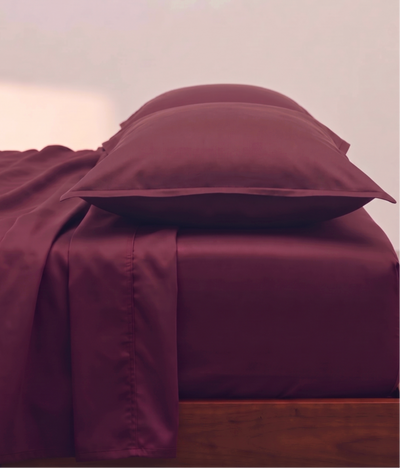
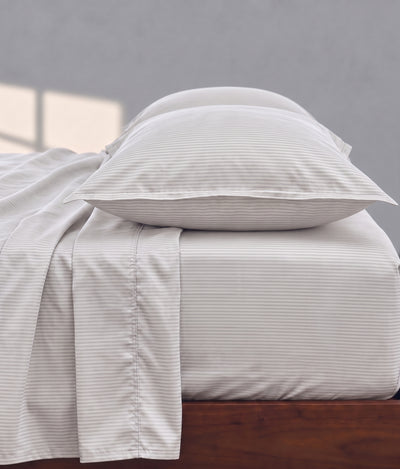
Want the finished-textile answer on your own bed? The Breeze Sheet Set is eucalyptus-derived TENCEL™ lyocell, certified to OEKO-TEX® STANDARD 100 Class I and naturally cool to sleep on. |
How to Verify an OEKO-TEX® Label
Every certified product carries a unique certificate number on its product label, and that number is the whole game.
Enter it at oeko-tex.com, or scan the QR code printed on many labeled products, and the database shows whether the certification is current, which standard it falls under, and which institute ran the testing.
Three things to check while you're there:
-
Validity: Certificates last 12 months, so an expired number means the product hasn't been re-verified.
-
Scope: Certification belongs to a specific product, so a supplier can hold a certificate on one item and sell others without it. A brand name on its own guarantees nothing.
-
Product class: Class I and Class II carry different limit values, so confirm which tier your item was certified under.
If a retailer can't point you to a certificate number at all, treat the label as decoration until proven otherwise.
So, What Does OEKO-TEX® Mean for You?
After all the tiers and acronyms, the promise itself is simple. An independent lab tested the finished textile against more than 1,000 harmful substances, and you can look up the result.
That's rare in a market where most "clean" language is marketing.
From there, the move is obvious. For anything that spends hours against your skin, bedding most of all at six to eight hours a night, look for OEKO-TEX® STANDARD 100, and treat Class I as the strongest version of the promise.
You shouldn't have to choose between that standard and a bed you actually love sleeping in.
Buffy certifies every sheet fabric it makes, Breeze (eucalyptus-derived TENCEL™ lyocell), Supima cotton, and Belgian linen, to Class I, the same tier applied to newborn products.
The coolest sleep starts with the cleanest chemistry, and now you know exactly how to check the label.
Frequently Asked Questions (FAQs)
What does OEKO-TEX® certification mean when buying bedding?
OEKO-TEX® certification on bedding means the finished sheet set, including its dyes and thread, was lab-tested against restricted harmful substances and passed. Bedding needs Class II, the direct skin contact tier, but some brands certify bedding to the stricter infant-grade Class I. Check the certificate number on the label to confirm the class and that it's current.
What harmful substances does OEKO-TEX® actually test for?
OEKO-TEX® STANDARD 100 tests against more than 1,000 harmful substances, including formaldehyde, azo dyes that can release carcinogenic amines, heavy metals like lead and cadmium, phthalates, pesticide residues, and certain PFAS-type finishes. Limit values are set by product class and reviewed annually, with the strictest ceilings applied to Class I infant-grade products.
OEKO-TEX® vs GOTS: what does each certification actually cover?
GOTS certifies that a textile was made from organically farmed fiber and processed to organic standards through the supply chain. OEKO-TEX® STANDARD 100 certifies the finished textile: whether the completed product, whatever its fiber source, tests below limit values for restricted substances. Organic answers the farm question, OEKO-TEX® answers the finished-product question, and for bedding, the finished-product answer is the one that matters most.
Does OEKO-TEX® certified mean a product is non-toxic?
OEKO-TEX® certification means the finished textile was tested against more than 1,000 restricted substances and came in below the limit values for its product class. That's the most specific chemical-safety claim a textile label makes, though it applies to the tested product only, and the strictness depends on the class, with Class I the tightest. It's proof of testing, with numbers attached.