
Use the instructions for the exact sheet, reduce unnecessary friction and heat, and treat early surface change as information—not automatically as proof of poor care or a defective product.
The safest care routine is product-specific. Fiber, yarn, weave, finish and construction affect how a sheet responds to washing and use, so one internet rule should not override the label for the product on your bed. Start with the care label, then use the steps below to reduce avoidable stress during sorting, washing, drying and storage.
Care can lower avoidable wear, but it cannot guarantee that a sheet will never pill. It also should not be used to explain away a genuine construction or quality problem. If surface change appears early, spreads quickly or seems inconsistent with the way the sheet has been used, pause before altering the fabric and contact Buffy with the details listed below.
The quick care routine
Use this as the decision sequence, not as a substitute for the exact product card later on the page.
Identify the sheet: Confirm the product, size and fabric before choosing settings or products.
Read the label: Use the current product-specific instructions for temperature, cycle, detergent, drying and restricted products.
Reduce unnecessary contact: Keep the sheet away from rough or snagging items and give it enough room to move freely in the drum.
Use only what the label allows: More detergent or an extra additive is not automatically gentler. Stick to the type and amount listed for your sheet.
Dry only as directed: Follow the drying method on the label, and take the sheet out once it is dry rather than adding extra heat or time.
Inspect before altering: If fuzz or pills appear, photograph the area and check the troubleshooting section before pulling, shaving or cutting the surface.
What pilling is—and what can influence it
Pilling is a visible surface change in which loose fibers collect into small balls or clusters on a fabric. Contact and abrasion can contribute, while fiber, yarn, fabric structure and finish influence how readily pills form and remain attached. That is why two fabrics exposed to the same household routine may not look the same over time.
A pilling-resistance test asks how a specified sample changed under a named laboratory method. ASTM D3512, for example, evaluates a fabric's propensity to form pills and related surface changes in a random-tumble test. It does not recreate every mattress, sleeper, pet, laundry machine or year of household use. ASTM also cautions that D3512 has poor between-laboratory precision, so results from different laboratories should not be lined up as if they were automatically comparable.
-
Pilling is not the same as shrinkage, fading, a pulled thread, a tear, a hole or a seam failure.
-
One localized high-contact area and fast, widespread change are different troubleshooting patterns.
-
A record of how a sheet has been washed helps explain what happened. It does not mean the way you cared for it caused the problem.
Pilling is not caused by one variable. The fabric itself matters, and so does the contact it experiences in bed and during care. The practical goal is to remove avoidable stress without presenting ordinary sleep or washing as misuse.
-
Repeated contact: movement against the sleeper, sleepwear, another bedding layer or the mattress surface can concentrate wear.
-
Laundry contact: rough, heavy or fastened items can create a different wash environment from sheets washed with compatible bedding.
-
Heat and time: settings beyond what the label calls for may add unnecessary stress, but heat is not the only factor that can affect the surface.
-
Product construction: fiber length, yarn, weave and finish can affect surface behavior; correct care cannot repair a genuine material or construction issue.
Wash cooling sheets step by step
Confirm the exact product
Do not identify a care routine from color or hand-feel alone. Check the sewn label, order record or exact product page. A Breeze Sheet Set and Breeze Fitted Sheet may share fabric, but the live instruction for the selected SKU still controls.
Prepare a compatible load
Remove items that can snag or add concentrated abrasion. Keep sheets from being packed so tightly that they cannot move freely. If the sewn label or current product instructions do not address compatible loads, ask Buffy rather than assuming the answer is the same for every sheet.
Choose the right detergent and additives
Use only a detergent or additive permitted by the sewn label or current product instructions. If neither source addresses bleach, softener, brightener, stain treatment, vinegar, baking soda or another laundry product, ask Buffy before using it.
Select the right temperature and cycle
Follow the exact wording on your care label. 'Cold,' 'cool' and 'warm' are different settings, not three ways of saying the same thing. If your label and a web page seem to disagree, follow the sewn label and tell Buffy so the page can be corrected.
Dry as directed
Use the drying method and setting on your label, and avoid extra heat or tumbling beyond what it calls for. If your sheet calls for line drying, air drying or taking it out as soon as the cycle ends, your care card below says so.
Check the surface before the next use
Look at the fitted-sheet contact zones, pillowcases and any area that meets a rougher layer. If something has changed, note when it appeared, where it is concentrated and whether it changed after a particular wash. That record makes troubleshooting more useful.
Use the care card for your exact Buffy sheet
The cards below are short enough to read beside the washing machine. Each fabric has its own card, so check the one that matches the sheet in your hands—even if the instructions look similar.
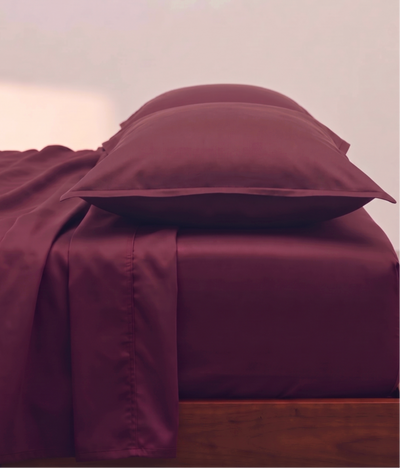
Breeze Sheet Set and Breeze Fitted Sheet
|
Product |
Care instructions |
|---|---|
|
Machine wash cold; tumble dry low. |
|
|
Machine wash cold; tumble dry low. |
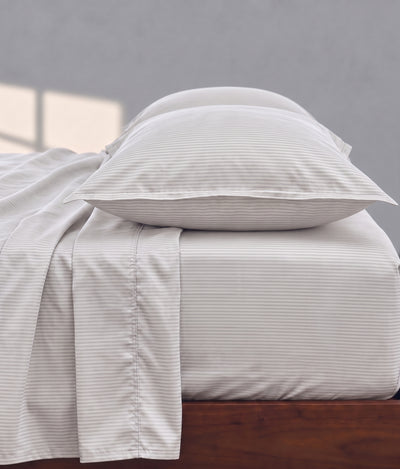
Belgian Linen Sheet Set and Fitted Sheet
|
Product |
Care instructions |
|---|---|
|
Belgian Linen Sheet Set |
Machine wash cold; line or tumble dry low. |
|
Belgian Linen Fitted Sheet |
Machine wash cold; line or machine dry. Leave wrinkled or iron on high for a more polished look. |
Supima Cotton Sheet Set and Fitted Sheet
|
Product |
Care instructions |
|---|---|
|
Supima Cotton Sheet Set |
Machine wash cold; do not bleach; tumble dry low. |
|
Supima Cotton Fitted Sheet |
Follow the sewn care label and the current product page for this SKU. |
Laundry products and stain treatment
Before treating a stain, check the care card for your exact sheet. A stronger product or hotter setting can change the fabric as well as the stain, so use only the products and sequence listed for that sheet. If the card does not answer your situation, ask Buffy before treating the area.
Drying and storage without unnecessary wear
Drying is part of the care cycle, not an afterthought. Follow the method on your care card and stop when the sheet is dry rather than adding extra heat or time by habit. Before storing, make sure the sheet is fully dry and free of a snag or pulled thread that could worsen in the next wash.
-
Use the drying setting or air-dry instruction in the care card for your sheet.
-
Before storing, make sure the sheet is fully dry.
-
Store the sheet clean and fully dry, away from fasteners or rough items that could snag it.
What to do if pilling appears
Do not assume the sheet is ruined or that the way you cared for it caused the problem. Use the sequence below to preserve evidence and choose the right next step.
Pause before removing pills: Pulling, cutting or shaving may change the surface and make the original pattern harder to assess.
Photograph the pattern: Capture a wide view and a close view, including any seam, fitted corner or nearby bedding layer.
Record timing and location: Note when the change first appeared, whether it is localized or widespread, and which parts of the sheet are affected.
Record the care history: Note the settings and products you used. This background helps Buffy understand the pattern—it is not a checklist you need to defend.
Check for a contact source: Look for a rough mattress protector, fastener, pet claw, sleepwear detail or laundry item that meets the same area. Finding one does not mean it caused the pilling; it is one more clue.
Contact Buffy: Get in touch before altering the surface, especially when change appears early, spreads quickly or accompanies thinning, tearing, a pulled thread or seam failure. You can also ask whenever you are simply unsure.
Before using a fabric shaver, comb, scissors or another pill-removal tool, document the surface change and contact hello@buffy.co for product-specific guidance.
When to contact Buffy
Get in touch if the change appeared unusually early, spread quickly, covers a wide area, or came with thinning, a tear or a seam problem—or if it simply looks like more wear than you would expect for how long you have had the sheet. Share the order number, product and size, photos, date first noticed and care history so Support can assess the pattern. A quality review and a return are separate processes; the route available depends on the current policy and the issue being reviewed. If you are simply not sure whether what you are seeing is normal, that is reason enough to ask.
Email hello@buffy.co with your order details and photos of the issue. The team will review the pattern; a review is not a promised replacement or refund.
Buffy offers a 50-night risk-free return policy beginning on delivery. Product-quality review is a separate support process; use the current return terms and contact Buffy for the route that fits the issue.
What a pilling-resistance result can tell you
A laboratory result can show how a specified fabric sample performed under a specified method and endpoint. It can help compare a claim with its evidence. It cannot promise that no pill will ever appear in a household bed.
Keep pilling, abrasion and tear results separate. A pilling rating describes surface change under its named method. An abrasion endpoint describes resistance to wear under a different method. Tear strength answers another question. None should be relabeled as a lifetime score.
Laboratory comparability matters too. ASTM D3512 and D4966 each caution that between-laboratory precision is poor. A reported result should therefore be read with its sample, method, conditions and laboratory—not lined up against another laboratory's number without a controlled comparative study.
Breeze pilling-resistance result
In Hohenstein testing, Breeze received a 4.0–5.0 pilling-resistance rating after 60 minutes under ASTM D3512.
Separate tests observed first thread breakage at 18,000 abrasion rubs under ASTM D4966-22 and tear strength of 10.4 lbf warp and 6.4 lbf weft under ASTM D1424.
These laboratory results are not a promise that the sheet will never pill, tear or wear in household use.
Frequently asked questions
Can pilling be prevented completely?
No care routine can honestly guarantee that a sheet will never pill. Product construction and household contact both matter. Correct care can reduce avoidable stress and make troubleshooting clearer, but it is not a lifetime guarantee.
Does pilling mean my sheets are defective?
Not automatically. Timing, location, spread, construction and care history all matter. If change appears unusually early, develops quickly or occurs with thinning, tearing or seam failure, document it and ask Buffy to review the pattern before altering the surface.
Can I wash sheets with towels or everyday clothes?
Use the compatible-load guidance in the care card for your exact sheet. Rough, heavy or fastened items can create a different contact environment, so do not assume every mixed load is equivalent. If the care card does not list the combination, check with Buffy.
Does high dryer heat cause pilling?
Heat on its own is rarely the whole story. It can add stress when it goes beyond what your label calls for, while fiber, yarn, construction and friction also affect the surface. Use the drying instruction for your exact sheet.
Should I use fabric softener to make sheets smoother?
Use only products permitted in the exact care card. A smoother feel is not proof that a product is helping the sheet, and a general fabric-softener rule should not replace Buffy's product-specific instruction.
Can I remove pills with a fabric shaver?
Before using a fabric shaver, comb, scissors or another pill-removal tool, document the surface change and contact Buffy for product-specific guidance.
Can washing change how cooling sheets perform?
Washing correctly is about protecting the sheet you have, not topping up a cooling effect. No care routine can promise that a fabric performs identically forever, which is why the useful question is what the sheet's testing measured and whether it included laundering. Follow your care card here, and use the cooling-mechanism guide to understand that evidence.
Does a laboratory pilling rating mean a sheet will never pill?
No. A rating describes the tested sample under a named method, duration and scale. It does not recreate every household-use condition or guarantee lifetime appearance.
Care for the sheet—and keep the support path clear
Start with the exact care card, reduce unnecessary contact and heat, and inspect surface change before altering it. If the pattern seems early, rapid or unusual—or if you are simply unsure—document it and ask Buffy to review it. Good care protects the product experience; it does not remove the brand's responsibility to assess a possible quality issue. For purchase decisions, return to the Cooling Sheets Guide or compare the Best Sheets for Hot Sleepers. For the science behind cooling claims and test limits, use How Cooling Sheets Work.