
Key Takeaways
-
Sleeping hot has two sources, the room and your body, and the fixes divide the same way: four environmental moves and four personal ones.
-
The room strategy is timing: sealed and shaded while the sun is up, open and ventilated once the outside air drops below the inside.
-
Humidity and electronics are the two quiet heat sources most bedrooms ignore.
-
Your body sheds heat through skin and sweat, so breathable fabric, hydration, and pulse-point chilling all work with that system.
-
Bedding is the one sleep upgrade that works night after night without extra effort. Eucalyptus-derived TENCEL™ Lyocell cools from the fiber itself, not a coating that washes out.
Summer has a way of shrinking the night: the hours are all still there, but the sleep inside them gets thinner.
Most of these cost nothing; the ones that do are one-time purchases.
You work on the room by moving air at the right hours, blocking daytime sun, and unplugging what radiates. And you work on yourself, with breathable sleepwear, cooling bedding, and a wind-down that lowers your temperature before you lie down.
Neither job needs special equipment, and only a few items cost anything at all.
Why Your Bed Feels Too Hot in the First Place
Falling asleep requires your body to shed heat, and everything around you gets a vote in whether that heat actually leaves. A warm room slows it down. A dense mattress holds it close. Heavy bedding seals it in.
If your bed runs hot night after night, season after season, those exits are blocked, and your body keeps working to push heat out while you lie awake.
Every fix that follows opens one of those exits.
Cooling Your Sleep Environment
The room sets the ceiling on everything else. These four moves work even when how to sleep cool without AC is the only question that matters, because none of them depends on one.
1. Time Your Windows for Cross-Ventilation
Windows are a tool with an on-off schedule. Keep them shut through the hot hours, then open them on opposite sides of the home once the evening air outside drops below the air inside. That crosswind flushes out the day's stored warmth faster than a fan alone.
A fan in the window, pointed outward on the hot side, speeds up the exchange.
2. Black Out the Daytime Heat
Blackout curtains get filed under light control, but their summer job is heat control.
Sunlight through glass warms a room all afternoon, and that warmth is still in the walls at midnight. Close the shades on sun-facing windows before you leave in the morning, and the bedroom starts the night several degrees ahead.
3. Dry the Air Out
Sweat only helps when it can evaporate, and humid air refuses to accept it. That's why 78 muggy degrees feels worse than 84 dry ones.
A dehumidifier lowers the room's moisture load, letting your body's own system work as designed. You don't need it humming beside the bed all night, either. Running it for a few hours in the afternoon dries the room out enough for the hours that count.
4. Unplug What Glows and Hums
Every powered device in the bedroom is a small heater with a second job.
TVs on standby, game consoles, chargers, and old-style bulbs each add a little warmth, and together they add up. Move what you can out of the room, switch off what you can't, and let the bedroom hold only the electronics it needs, which is close to none.
Cooling Your Body
The room is half the job. The other half of staying cool while sleeping comes down to what's touching you and what you bring to bed.
5. Breathable Sleepwear and Bedding
Fabric is the layer you can't step away from, so it does the most work. Sleepwear should be light and loose, and the bedding underneath it should breathe.
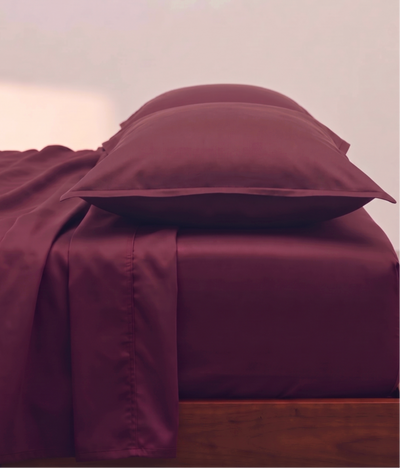
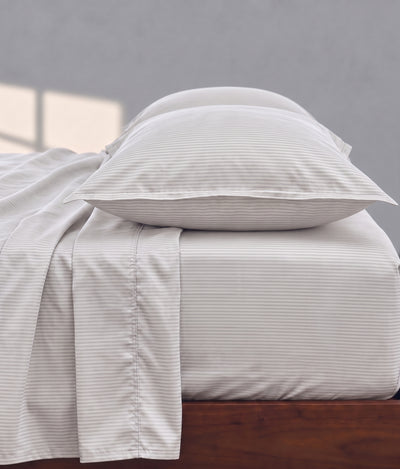
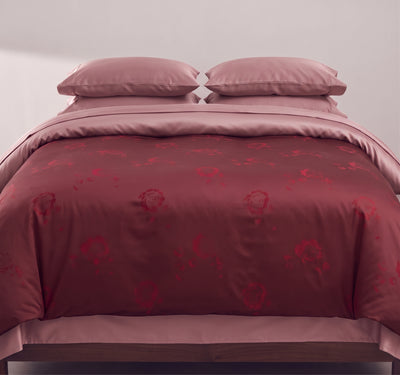
Eucalyptus-derived TENCEL™ Lyocell absorbs 50% more moisture than cotton, keeping a drier microclimate: the layer next to your skin stays dry overnight. That's the fiber behind Buffy's Breeze sheets, cool to the touch as verified by independent testing, and the wider cooling bedding collection built around it.
A cooling pillow deserves a spot too, since your face and scalp sit against the pillow all night. A cooling mattress pad can also tame a foam mattress that sleeps warm.
6. Shower Before Bed
A quick, tepid shower shortly before bed rinses off the day's warmth and leaves water on your skin to evaporate, which is your body's own air conditioning. If you prefer it warm, take it an hour or two earlier; the rebound afterward helps your core temperature drop on schedule.
Either route beats climbing in sticky.
7. Hydrate for the Night Shift
Sweating is your body's cooling system, and it runs on water. Go to bed underhydrated and the system rations itself exactly when you need it running. Spread your water through the evening, so you're supplied for the night without scheduling a 3 a.m. bathroom trip.
8. Cold Packs at Pulse Points
Wrists, neck, and ankles sit close to the surface and carry a lot of blood, so chilling them cools more than the spot you touch. Try a cold pack wrapped in a thin towel, a frozen water bottle at your ankles, or socks chilled in the fridge.
Blood passing through carries the lower temperature inward, and your whole body cools faster.
Your Sleep Cool Checklist: Set Up by Day, Cool by Night
Notice when most of these decisions happen: in daylight. Nobody hangs blackout curtains at 3 a.m. You win the push to sleep cool in the afternoon.
That's the most useful of the tips for hot sleepers: stop fighting the heat at night and start scheduling against it by day.
-
The room, set up once: windows shut by day and cross-ventilated at night, shades closed on the sun side, air kept dry, electronics out.
-
Your body, every evening: a shower, steady water, a cold pack if it's brutal, and breathable fabric on the bed.
One item lives on both lists. Bedding is set up once, like the room, and works every night, like a habit, with no willpower involved.
That's the slot Buffy's cooling bedding was built for. The cooling lives in the fiber, so it doesn't wash out and helps you sleep better. With no topical finish on the fabric, the sheets are certified to OEKO-TEX® STANDARD 100 CLASS 1, the infant-grade tier for textiles.
Handle the list by daylight, and the night takes care of itself.
Frequently Asked Questions (FAQs)
What are the best ways to sleep cool during summer?
Work both halves of the problem. For the room: keep windows and shades closed through the day, cross-ventilate after sunset, dry the air, and remove heat-emitting electronics. For yourself: breathable sleepwear and bedding, a pre-bed shower, steady hydration, and cold packs at pulse points on the worst nights. The room moves are mostly one-time setup, and the body moves take minutes each evening.
How to sleep cool without AC?
Timing does most of what a compressor would. Seal and shade the bedroom while the sun is up, then open windows on opposite sides once the outside air turns cooler than the inside, with a fan to push the exchange. Add dry air, dark shades, and breathable bedding, and you'll stay comfortable most nights won’t need a unit. On heat-wave nights, pulse-point cold packs and a chilled water bottle at the ankles carry you through.
What tips help hot sleepers get through the night without overheating?
Skip the hunt for one big fix and stack small habits: an early shower, water through the evening, the lightest sleepwear you own, and a bedroom stripped of warm electronics. Then make the always-on move: breathable, moisture-managing bedding, since it's the one layer working on your temperature every hour you're asleep. A chilled pillowcase helps sleepers who overheat from the head down.
Why do I get so hot when I sleep at night?
Your body has to shed heat to fall and stay asleep, and it gets blocked by a warm room, a heat-holding mattress, dense bedding, or pre-bed habits like late workouts and alcohol. Night sweats from hormonal shifts, like those in perimenopause, can drive it from the inside too.